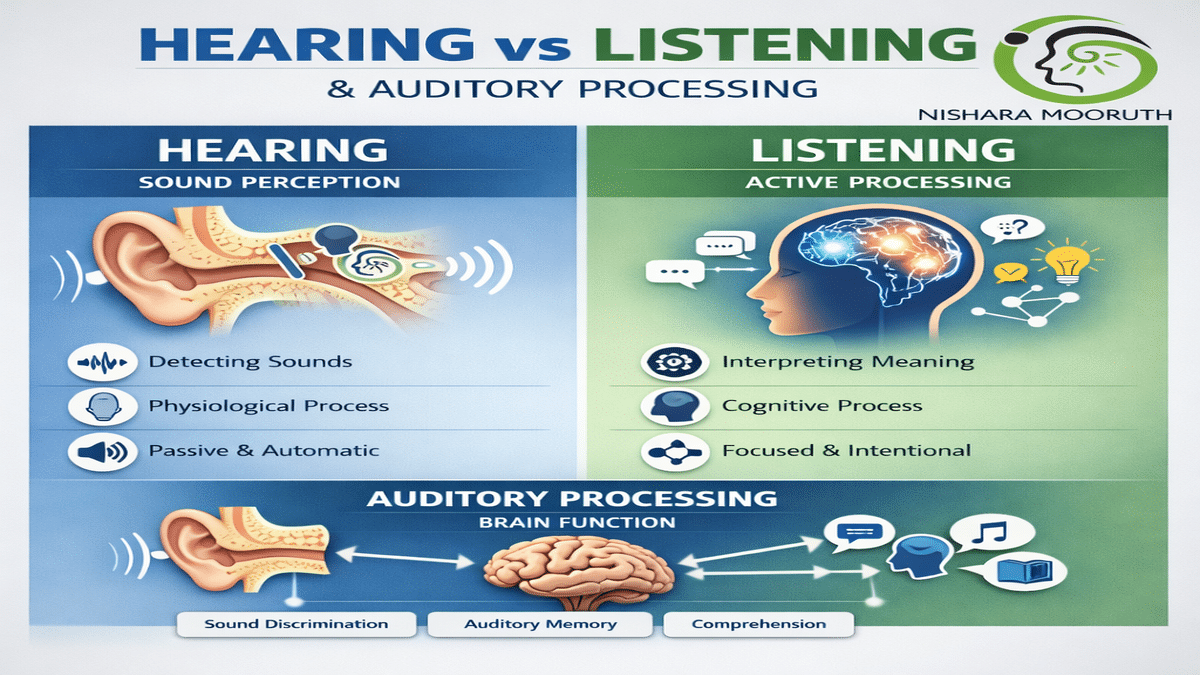
“My Child Can Hear, But They Aren’t Listening”: Understanding Auditory Processing
The Introduction
“It’s a common frustration for parents in Durban North: you call your child’s name, and they don’t respond. Or their teacher mentions they struggle to follow instructions in a busy classroom. You know they aren’t deaf, so what is happening? The answer often lies in the gap between Hearing and Listening.”
The Check: We perform diagnostic hearing tests to ensure the ‘hardware’ (the ear canal, drum, and nerves) is working perfectly. If a child has “glue ear” or a slight loss, they literally cannot hear the high-pitched sounds like “s,” “th,” or “f.”
Listening (Auditory Processing) is what the brain does with the sound it hears. It’s the ability to filter out the hum of an air conditioner to focus on a teacher’s voice.
The Challenge: A child with Auditory Processing Disorder (APD) hears the words, but the brain “jumbles” the message. To them, “Go get your hat and shoes” might sound like “Go… shoes.”
3. The Impact on Learning (Remedial)
If a child’s “software” is jumbled, they will eventually struggle with reading and spelling (Dyslexia) because they cannot map sounds to letters accurately.
The Specialist: Our Remedial Therapist.
The Solution: By identifying the processing gap early, we can provide the remedial tools to help the child decode language more effectively.